
IF-CRC Release Destinations
The Idaho Falls Community Reentry Center is operated by IDOC. It houses up to 112 male residents who are classified as minimum custody and nearing release. Community access and reentry work do not end the state’s authority. A resident remains in custody until IDOC records an actual release to supervision or the sentence is satisfied.
Leaving IF-CRC can mean parole to an approved community plan, completion of the full sentence, transfer to another IDOC site, or return to a more secure setting. Only the first two can represent release from physical state custody, and parole still leaves the person under IDOC jurisdiction. The IDOC detail record, Commission action, VINE event, and final discharge documentation answer different parts of that path.
Confirm an IF-CRC Release
Search the IDOC Resident/Client Search by last name or IDOC number. The tool accepts at least two letters of the last name or the first three digits of an IDOC number. Select a result only after comparing identifiers. A detail can show the person’s top-level status, current facility or community district, sentence rows, sentencing county, case number, Released to Supervision date, Sentence Satisfaction Date, parole eligibility, and next hearing.
- If the result names IF-CRC and says In custody, the person has not been released to the community.
- If it says In community, inspect whether the active row is parole or probation and note the supervising district.
- If it says Discharged, record the date as the best simple public sign that IDOC jurisdiction ended.
- Compare any Commission tentative parole date with the later IDOC or VINE event. A planned date is not a completed exit.
- Request state records when an exact basis, sentence calculation, or final discharge document is required.
IDOC updates the public search daily but warns that fast changes can lag. Call IF-CRC at 208-525-7143 for a current facility question, while respecting what staff can disclose. For a broader map of county and state sources, consult the Bonneville County release search.
IF-CRC Records and Contact
IF-CRC is at 3955 Bombardier Avenue, Idaho Falls, Idaho 83402. Its telephone number is 208-525-7143. A request for the actual state release or discharge record should go through the IDOC public-records portal, not through the Bonneville County jail records route. IDOC headquarters is at 1299 N. Orchard Street, Suite 110, Boise, Idaho 83706, with a main number of 208-658-2000.
State record request
Provide the person’s name, date of birth and IDOC number if known, sentencing county, and case number. Ask separately for the actual Released-to-Supervision date and basis, current sentence-calculation report, Sentence Satisfaction date, and final discharge or Gold Seal document. Separating those fields keeps eligibility and planning dates from being mistaken for release.
IDOC Constituent Services can be reached at 208-658-2055 and reports a general aim of replying within five business days, though some matters take longer. Constituent Services is an inquiry route, while a formal records request is the better path for a document. Commission hearing notices and decisions come from the Idaho Commission of Pardons and Parole, a separate state body.
How IDOC Status Works
In custody means the person remains confined under IDOC authority, including placement at IF-CRC. In community means active parole or felony probation supervision, not final discharge. Released to Supervision is the date most recently placed under supervision by the court or Commission. It need not be a Bonneville jail door time. Discharged is the clearest public IDOC status that state jurisdiction has ended.
A Fugitive result does not mean the sentence is complete. It indicates that the person was linked to community supervision and is wanted or their whereabouts are not known. A transfer between IDOC sites likewise does not create a release. Read the top-level status and the sentence rows together, because one label without its context can distort the custody stage.
The official IF-CRC page identifies the facility and its role.
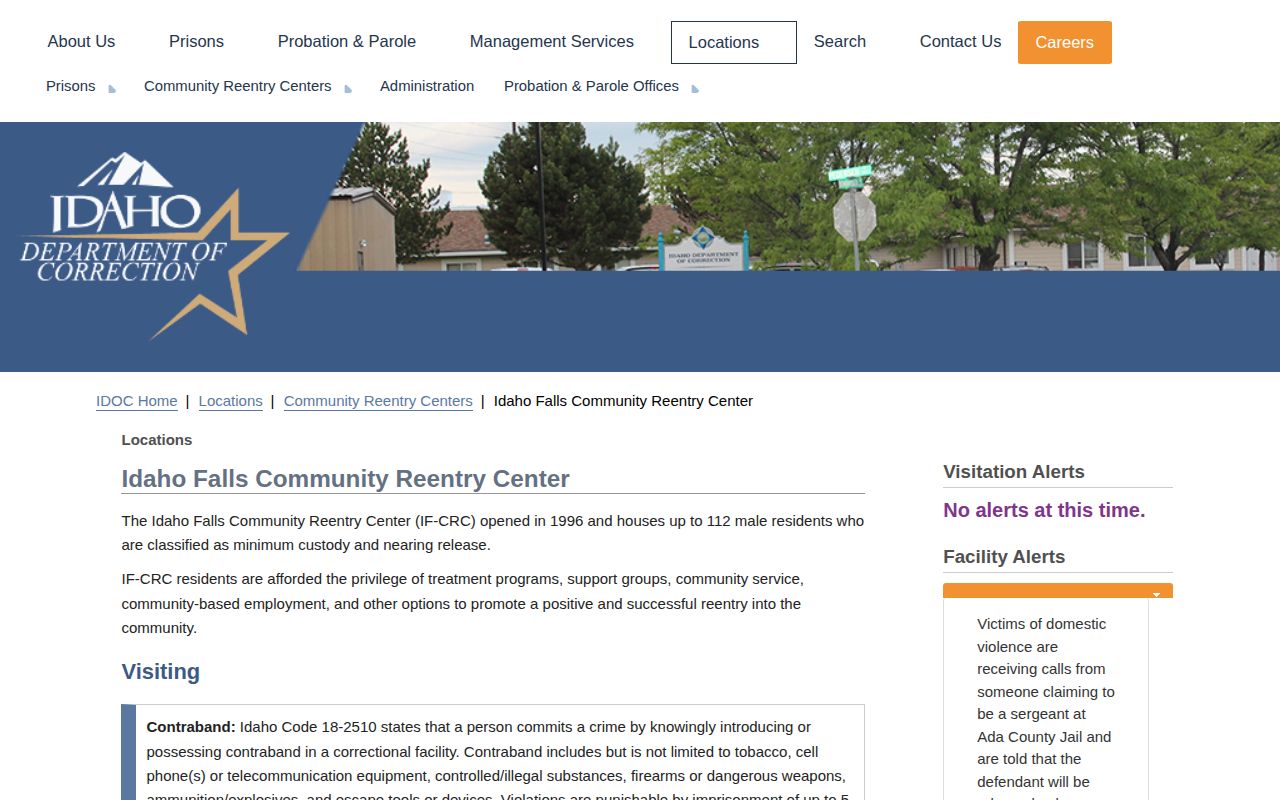
The captured state page confirms that IF-CRC belongs to IDOC and is not a county release archive.
IF-CRC Parole Date Limits
Idaho does not publish one universal field called a projected release date. The public record may show a Parole Eligibility Date, often shortened to PED. That is the earliest point when parole can be considered after the fixed term. A Commission decision may set a Tentative Parole Date, or TPD. The sentence record may also show a Sentence Satisfaction Date, which reflects the calculated full term.
A TPD remains conditional. Program completion, parole-plan approval, eligibility, required paperwork, a detainer, later Commission action, or other lawful changes can affect it. IDOC Sentencing Records calculates credit and sentence dates from judgments and can update them when a judgment or credit changes. A passed PED or TPD is not proof of release. Confirm the later public status, VINE event, or actual release record.
Idaho’s unified sentence has a fixed portion followed, where imposed, by an indeterminate portion. Parole during the latter is discretionary. It is inaccurate to apply a generic percentage shortcut or promise that a fixed term will be reduced. State records and the filed judgment control.
IF-CRC and Bonneville Jail
IF-CRC opened in 1996. The current Bonneville County Jail opened in November 1998 at 284 beds and later expanded to an operational capacity of 533. Work release expanded and Wood Court began at the jail in 2009. These local histories show two authorities serving different stages even though both facilities are in Idaho Falls.
The county jail holds adult local detainees and produces a BCSO booking and release record. IF-CRC holds state residents nearing release and produces an IDOC custody trail. The county roster should never be used to decide whether an IF-CRC resident is still confined. Likewise, placement at a community reentry center should not be described as completed release merely because the setting is less secure.
IF-CRC Parole and Discharge
Parole is conditional community release before the sentence ends. District 7, based in Idaho Falls, may appear in the public record with an officer and telephone once a person enters community supervision. The local office is at 2225 W. Broadway Street, Suite A, Idaho Falls, Idaho 83402, and its number is 208-528-4220.
Discharge is different. It ends IDOC jurisdiction after the sentence is satisfied or other lawful discharge action occurs. The Commission describes a final parole-completion document known as a Gold Seal, routed through the last supervision district. It may take up to a month. Someone can therefore be out of IF-CRC, under parole, and not yet discharged. Record the release-to-supervision date and final discharge date as separate events.
The Idaho Commission of Pardons and Parole publishes the state parole process and decisions.
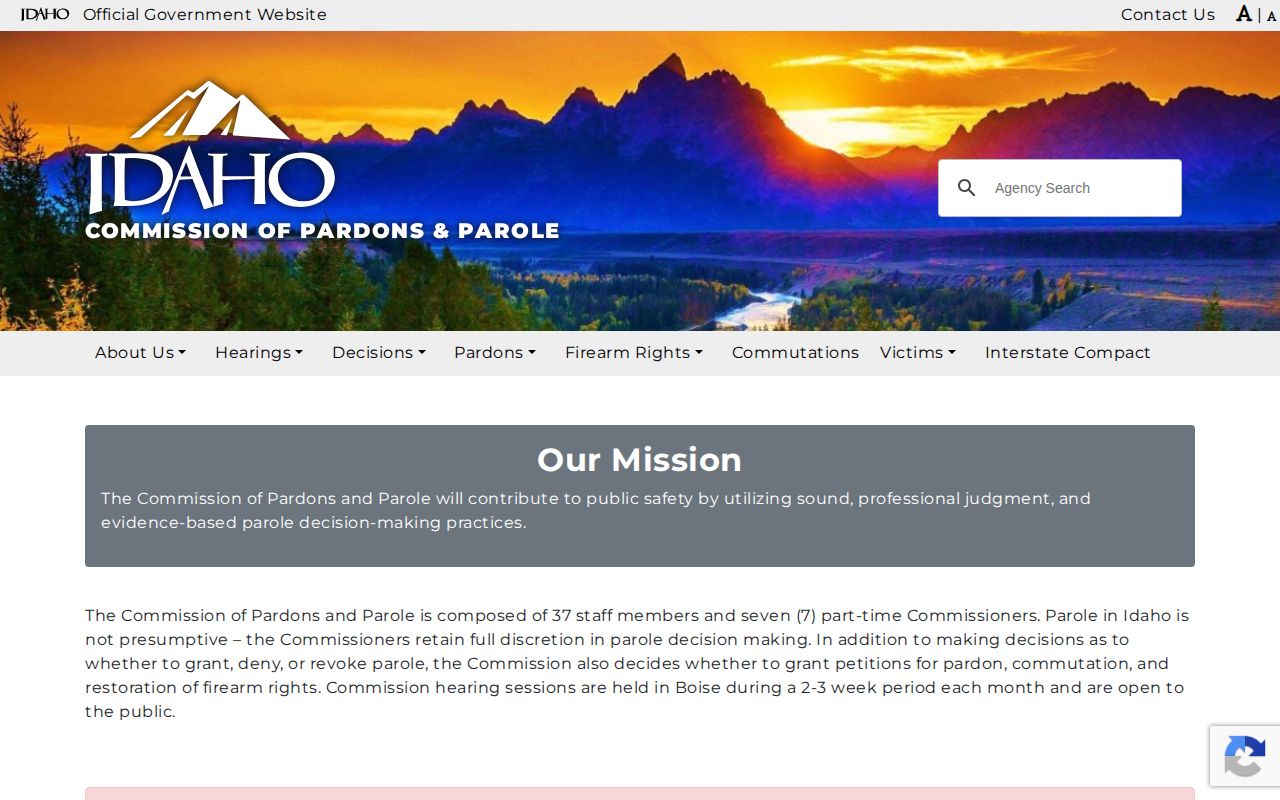
This source belongs to the decision side of the path. The later IDOC custody status confirms whether a planned release occurred.
IF-CRC Transfers and Detainers
An outstanding detainer can change the destination after IDOC custody. If another state, federal, or immigration authority assumes custody, the move is not a community release. Ask IDOC which agency received the person and preserve the date, identifier, and destination. Then use that agency’s system rather than continuing to rely on the IF-CRC listing.
For an immigration transfer, ICE may seek notice and short additional holding so it can take custody. Its locator has limited post-release visibility and can lag. For federal prison custody, use the BOP locator. A person under U.S. Marshals authority may require the federal docket and a records or contact route because there is no matching public historical release locator. Follow legal custody, not the Idaho Falls building name.